Choosing between metal braces and clear aligners can feel like standing in front of two doors without knowing what is behind either one. You may already know your teeth need straightening, or maybe your child's dentist just brought up orthodontic treatment for the first time.
Either way, you want a straight answer about cost, comfort, appearance, and how each option fits into a busy Gardena schedule before you commit to anything.
Gardena Dental Care offers both metal braces and clear aligners under one roof. Dr. Hamid Barkhordar, an orthodontist trained at USC and the Harvard School of Dental Medicine, is also an Invisalign® Diamond+ top 1% provider.
That combination of fixed-braces expertise and aligner experience gives families a single, trusted place to get an honest recommendation.
Keep reading to learn how metal braces and clear aligners compare across the four areas that matter most: daily life and comfort, treatment time, appearance, and cost. By the end, you will have a clear picture of which path matches your family's routine and budget. Your next step will feel simple rather than stressful.
Metal Braces vs Clear Aligners: The Quick Answer
Neither metal braces nor clear aligners are the "better" choice for everyone. The right pick depends on your specific bite problem, your daily habits, and what matters most to you.
When Fixed Braces Make More Sense
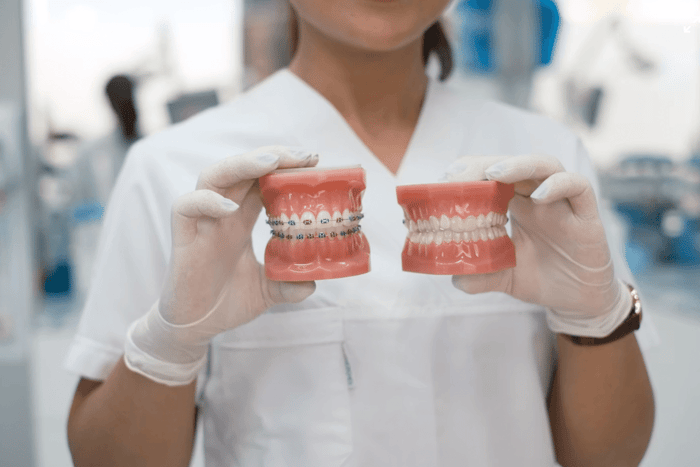
Traditional metal braces use brackets and wires that stay cemented to your teeth around the clock. That constant force makes them the stronger tool for complex orthodontic cases. If you or your child has severe crowding (teeth overlapping significantly), a deep overbite, underbite, or crossbite, fixed braces give the orthodontist precise control over each tooth.
Braces also work well for younger patients who may not keep track of a removable appliance. Because they are glued in place, there is no temptation to leave them on the counter during lunch.
When Removable Trays Are a Better Match
Clear aligners, such as Invisalign®, are smooth plastic trays you swap out every one to two weeks. They fit snugly over your teeth and are nearly invisible. For mild to moderate spacing, crowding, or certain bite problems, aligners can deliver results that are comparable to fixed appliances in clinical measurements.
Adults who attend meetings, teach classes, or work customer-facing jobs in Gardena often prefer trays because they are easy to remove for photos or presentations. You can also take them out to eat and brush normally.
Why the Right Choice Depends on Your Bite, Routine, and Goals
Your orthodontist evaluates three things before recommending one path: the complexity of your misalignment, how consistently you will wear removable trays (22 hours a day is the target), and your personal priorities around visibility and lifestyle.
Factor | Metal Braces | Clear Aligners |
|---|---|---|
Severe crowding or bite issues | Strong control | May need attachments or have limits |
Mild to moderate misalignment | Effective | Equally effective for many cases |
Compliance needed from patient | None (fixed in place) | High (must wear 22 hrs/day) |
Removability | No | Yes |
Visibility | Noticeable | Nearly invisible |
Knowing which category your teeth fall into is the first step. Understanding how each option plays out in your daily routine is the next.
How Each Option Works Day to Day
Your daily experience with orthodontic treatment varies a lot depending on which system you choose. It helps to picture both before your consultation.
Brackets, Wires, and In-Office Adjustments
Metal brackets are small squares bonded to the front of each tooth. An archwire (the thin metal wire that runs across them) connects the brackets, and tiny elastic ties hold the wire in place. Your orthodontist tightens or replaces the archwire every four to eight weeks, gradually guiding misaligned teeth into position.
Each adjustment visit typically takes 20 to 30 minutes. You may feel mild pressure for a day or two afterward as your teeth shift. Gardena families juggling school drop-offs and work can usually fit these appointments into a lunch break or after-school slot.
Tray Changes, Wear Time, and Follow-Through
With clear aligner therapy, you receive a series of custom trays. You wear each set for one to two weeks, then move to the next tray in the series. Follow-up visits happen roughly every six to ten weeks, and they tend to be shorter than wire-adjustment appointments.
The catch is discipline. Trays need to stay in your mouth at least 22 hours per day. Taking them out too often slows progress and can extend treatment time.
Eating, Cleaning, and Oral Hygiene Routines
This is where the two options differ most in everyday life:
Braces: You need to avoid hard, sticky, or crunchy foods that could pop a bracket. Brushing takes extra time because food traps around the wires. A floss threader (a small needle-like tool that pulls floss under the wire) becomes part of your nightly routine.
Aligners: You remove the trays before every meal, so you can eat whatever you want. Brush and floss as normal, rinse the trays, and snap them back in.
If keeping teeth clean during orthodontic care concerns you, a professional deep cleaning before treatment starts can give you a healthy baseline. How each option looks and feels once it is in your mouth is worth exploring next.
Comparing Appearance, Comfort, and Daily Confidence
Most patients care about more than just straight teeth. They want to feel good while getting there.
Visibility at School, Work, and Social Events
Metal braces are noticeable. The brackets reflect light, and the elastic ties can be colorful or silver. For teens, that can be a fun way to express personality. For adults in professional settings, the metallic smile may feel like a drawback.
Clear aligners sit flush against your teeth and are hard to spot from a few feet away. Many adults lean toward trays for exactly this reason: from a normal conversational distance, most people simply do not notice them.
What Feels Different in the First Few Weeks
Both options cause some soreness as teeth begin to move. With braces, the brackets and wires can rub against the inside of your cheeks, sometimes causing small sores until your mouth adjusts. Orthodontic wax helps cushion those spots.
Aligners tend to feel like firm pressure without the poking edges. Studies suggest that patients treated with clear aligners report less pain perception in the early days of treatment than those with fixed braces.
The trays can still feel tight each time you switch to a new set, but the discomfort usually fades within 48 hours.
Less Noticeable Alternatives Within Braces
If you want fixed braces but prefer a subtler look, there are middle-ground options:
Braces Type | Material | Visibility | Typical Cost vs. Metal |
|---|---|---|---|
Ceramic braces | Tooth-colored ceramic brackets | Less visible than metal | Slightly higher |
Self-ligating braces | Metal or clear brackets, no elastic ties | Similar to standard or slightly less | Comparable to slightly higher |
Lingual braces | Metal brackets placed behind teeth | Hidden from view | Noticeably higher |
Ceramic brackets and self-ligating braces keep the control of fixed appliances while staying less obvious than traditional metal.
If you are interested in cosmetic improvements alongside orthodontics, options like professional teeth whitening or cosmetic bonding can be planned after your braces come off. Appearance and comfort matter, but so does how long you will actually be in treatment.
Treatment Time, Complexity, and Long-Term Results
Treatment duration is one of the most common concerns Gardena families raise, and the honest answer is that it depends on your starting point.
What Affects Treatment Duration
Mild spacing or crowding may take 6 to 18 months with either option. Moderate to severe cases often require 18 to 36 months, and fixed braces tend to offer shorter treatment times in more complex scenarios because the orthodontist can apply forces aligners cannot easily replicate.
Your age also plays a role. Teens' jaws are still growing, which can speed tooth movement. Adults may need a few extra months because mature bone remodels more slowly.
Cases That Often Need More Control
Certain bite problems require the kind of precise, multi-directional force that brackets and wires deliver best. These include large overbites or underbites, rotated premolars, teeth that need to be pulled down or pushed up vertically, and cases requiring tooth extractions followed by space closure.
Clear aligners have improved significantly, and attachments (small tooth-colored bumps bonded to teeth) extend what trays can do. Still, for the most involved orthodontic treatments, fixed braces remain the tool with the longest track record of predictable results.
Why Retainers Matter After Teeth Move
No matter which path you choose, your teeth will try to drift back toward their original positions once active treatment ends. A well-fitted retainer is what protects your investment.
Retainers can be removable trays you wear at night or thin wires bonded behind your front teeth. Your orthodontist will recommend the type that suits your case.
Skipping retainer wear is the most common reason straight teeth shift years later. Knowing the time commitment is important, and so is knowing the financial commitment.
Cost, Payment Flexibility, and Kids vs Adults
The price tag is often the first question families ask, and it is a fair one. Knowing what drives the number helps you plan with confidence.
Why Fees Vary From One Case to Another
Orthodontic fees depend on the severity of misalignment, the type of appliance, treatment length, and the number of office visits.
Metal braces for a straightforward case might fall in the range of $3,000 to $7,000. Clear aligners typically range from $3,500 to $8,000. The total cost should include consultations, appliances, follow-up visits, and retainers so you are not surprised later.
How Adults and Parents Often Prioritize Differently
Adults often value aesthetics and convenience, which can make aligners appealing even if they cost a bit more. Parents choosing for a child may focus on reliability and a lower risk of lost trays, making fixed braces a practical choice.
For families exploring children's dentistry and orthodontics together, the American Association of Orthodontists recommends an orthodontic checkup by age 7 so you can plan ahead rather than react.
Planning Around Insurance and Flexible Payment Plans
Many dental insurance plans cover a portion of orthodontic treatment, often up to a lifetime maximum of $1,000 to $2,500. Reviewing your benefits before your consultation helps you understand your share. To make the most of your coverage, check out tips on using dental benefits before they expire.
Gardena Dental Care provides flexible payment plans and financing options so cost does not have to be the reason you delay care. A clear financial breakdown before treatment starts means no guesswork. Once cost is settled, you can make your decision with confidence.
Choosing With Confidence in Gardena
The best orthodontic decision fits your teeth, your life, and your budget. Walking into your consultation with the right questions turns a stressful appointment into a productive conversation.
Questions to Bring to Your Consultation
Which option can correct my specific bite problem most effectively?
How long will my treatment take with braces versus aligners?
What is the total cost, including retainers and follow-up visits?
Do you offer Saturday or after-work appointments for adjustments?
What happens if a bracket breaks or a tray is lost?
Can I see before-and-after cases similar to mine?
Writing your questions down ahead of time helps ensure you cover everything important. If dental anxiety is a concern, ask about sedation options that can make visits more comfortable.
What a Personalized Orthodontic Plan Should Cover
A thorough plan should include digital imaging of your teeth, a diagnosis of your specific misalignment, and a recommended appliance with a clear reason why.
It should also include a visit schedule that works around school or work and a written cost estimate with your insurance portion broken out. You can find more details about what to expect on the orthodontics FAQ page.
Dr. Hamid Barkhordar is trained in both fixed braces and Invisalign® clear aligner therapy, so your plan is based on clinical evidence and tailored to your needs.
Booking a Consultation Without Pressure
You do not need to have all the answers before you book. A consultation gives you the information to compare your options side by side, with numbers specific to your case.
A consultation is the easiest way to compare both options with numbers specific to your case. Call Gardena Dental Care at (424) 295-7885 to set one up. The calendar includes Saturday and same-day openings, so finding a time that fits your schedule is easy.
Frequently Asked Questions
Which Option Tends to Work Faster for Common Crowding or Spacing Problems?
For mild to moderate crowding or spacing, both options often finish within 6 to 18 months. Fixed braces may be faster for more involved cases because the orthodontist can apply forces that trays cannot replicate as easily.
What Kinds of Tooth or Bite Issues Can Braces Fix That Clear Trays May Not Handle as Well?
Braces excel at correcting severe crowding, large overbites, underbites, crossbites, and teeth that need significant vertical movement. Aligners work well for milder issues but may need extra attachments or have limitations with complex rotations.
What Are the Biggest Pros and Cons for Eating, Brushing, and Keeping Teeth Clean During Treatment?
Aligners win on convenience because you remove them to eat and brush normally. Braces require you to avoid sticky or hard foods and spend extra time cleaning around brackets. A floss threader or water flosser helps keep gums healthy with braces.
What's a Normal Price Range for Clear Tray Treatment, and Why Can Quotes Vary So Much From One Office to Another?
Clear aligner treatment typically costs $3,500 to $8,000. Quotes vary based on case complexity, the number of trays needed, the provider's experience level, geographic location, and whether retainers and follow-up visits are bundled into the fee.