
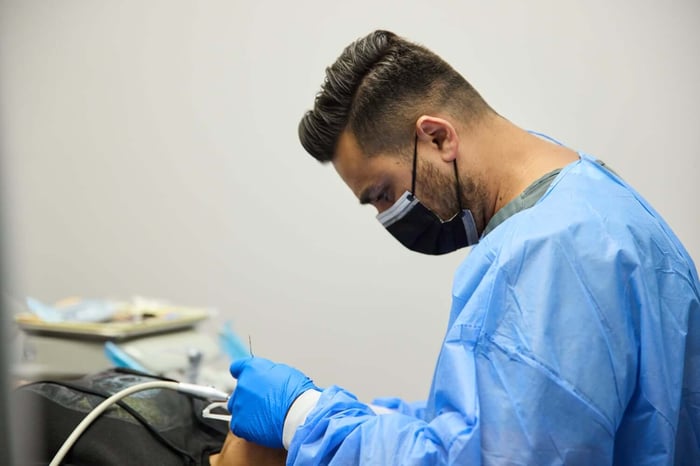
If you are wondering what dental crowns are, they are essentially custom-made caps designed to protect your smile. A tooth crown is placed over a damaged or weakened tooth to restore its shape, strength, and function.
It fully covers the visible portion of the tooth, protecting what remains of the natural structure from further breakdown. When a tooth has experienced significant decay or a fracture, a dental crown is one of the most reliable ways to preserve it long-term without moving toward extraction.
At Gardena Dental Care, our team leverages decades of combined clinical experience and specialized training in restorative dentistry. We adhere to the highest professional standards, using evidence-based techniques and state-of-the-art materials to ensure long-lasting results.
We understand that needing a crown can feel overwhelming, which is why we prioritize clear communication and patient education throughout the process. This article covers when a dental crown is recommended after decay or a fracture, the different crown materials available, how the two-visit placement process works, and how a crown protects your tooth in everyday life.
Key Takeaways
A crown becomes necessary when decay or damage leaves too little healthy tooth structure for a filling to hold reliably.
Crown materials range from tooth-colored porcelain and ceramic to metal and porcelain-fused-to-metal, each suited to different teeth and needs.
Most crown placements follow a two-visit process, with a temporary crown protecting the tooth between appointments.
When A Filling Is No Longer Enough
There is a point in the progression of tooth decay or structural damage when a filling simply cannot do the job alone. The decision between a standard dental filling and a crown comes down to one key question. Your dentist must determine how much healthy tooth structure is still left to work with.
Severe Decay, Large Fillings, And Weak Tooth Walls
When decay removes a significant portion of a tooth, the remaining walls may be too thin to support a dental filling. Without the proper support, the tooth can easily crack under normal chewing pressure.
Decay affecting more than half the tooth typically calls for full coverage with a crown.
A large existing filling that is cracking, leaking, or showing new decay at its edges may need to be replaced with a crown rather than refilled.
Thin or undermined tooth walls are prone to fracture, and a crown wraps around the entire structure to hold it together.
A filling repairs. A dental crown protects and strengthens.
Why A Crown Is Often Recommended After A Root Canal
Root canal treatment removes infected pulp tissue from inside the tooth, which is necessary to save the tooth. The trade-off is that the process leaves the inner chamber hollow, making the tooth noticeably more brittle.
Without a crown placed over the treated tooth, the risk of fracture during everyday chewing is much higher. A tooth restoration in the form of a crown distributes biting forces evenly across the surface rather than concentrating stress at one point.
Most back teeth that have had root canal treatment benefit from a crown for this reason.
How Crowns Help Save More Of The Natural Tooth
It may seem counterintuitive, but getting a dental crown at the right time can actually prevent the need for more invasive treatment later. When a weakened tooth is left unprotected, it can crack in ways that are no longer restorable.
A crown caps the tooth before that kind of damage occurs. Preserving the natural root and tooth structure supports better long-term oral health compared to extraction and replacement.
Situation | Filling Appropriate? | Crown Recommended? |
|---|---|---|
Small cavity, minimal damage | Yes | No |
Decay involving more than half the tooth | No | Yes |
Large existing filling showing stress | No | Yes |
Tooth after root canal treatment | Rarely | Usually yes |
Cracked or fractured tooth | No | Yes |
After A Crack, Chip, Or Break, Protection Matters Fast
A tooth fracture does not always announce itself with obvious pain. Some cracks are silent at first, while others cause sharp discomfort with every bite. Either way, the structure of the tooth is compromised, and how the situation is addressed depends on the extent of the damage.
Which Types Of Tooth Fracture Commonly Need Full Coverage
Not every chip requires a crown, but certain fracture types almost always do.
Craze lines (surface-level micro-cracks) are minor and usually do not need a crown.
A fractured cusp, where part of the biting surface breaks off, often requires full crown coverage to restore chewing function.
A crack extending toward the root is more serious and may need a crown to prevent the crack from propagating further.
A tooth that has broken at or near the gum line may need additional preparation before a crown can be placed.
The deeper the fracture line, the more likely a crown becomes the appropriate path.
Signs The Tooth May Be Too Damaged For Bonding Alone
Dental bonding can address minor chips and small surface defects well. A crown becomes the better option when:
The break involves a significant portion of the tooth's biting surface.
Sensitivity to hot and cold persists beyond a couple of weeks after the injury.
Gum irritation or swelling near the damaged tooth suggests the crack may have extended below the gumline.
Bonding material has already been placed and fractured again.
Repeated repairs to the same tooth are often a sign that full crown coverage is the more stable long-term solution.
How Crowns Help Reduce Stress On A Fractured Tooth
A crown works by encasing the entire visible tooth, which prevents the crack from widening when you bite down. Think of it as binding the tooth together so that the chewing force spreads evenly across the surface rather than pulling the fracture apart.
This is why crown placement can make a noticeably cracked tooth feel dramatically better almost immediately. The relief comes from the structural support, not just the coverage.
How A Crown Protects Your Tooth Day To Day
Once a crown is placed, it becomes part of your daily oral routine in a very practical way. It restores function, but it also faces the same everyday pressures that affected the original tooth.
Restoring Chewing Strength And Bite Support
A well-placed crown restores your ability to chew comfortably on both sides of your mouth. Before the crown, many patients unconsciously favor the opposite side to avoid pain, which can create uneven wear on the other teeth over time.
With the crown in place, normal bite support returns. Food impaction between the crown and adjacent teeth is less likely when the crown is shaped and fitted correctly. Proper oral hygiene around the crown, including brushing and flossing daily, keeps the gum line healthy and prevents decay from forming at the crown margin.
Covering Worn Or Fragile Teeth After Teeth Grinding
Teeth grinding, clinically called bruxism, gradually wears down enamel in ways that are not always visible until significant damage has occurred. When tooth wear reaches a point where the enamel layer is gone, the underlying dentin becomes exposed and sensitive.
Crowns placed over severely worn teeth restore their height and protect against further wear. This is especially relevant for back teeth, which take the most pressure during grinding episodes.
Maintaining good dental hygiene around crowned teeth still matters. Professional cleanings help catch any early signs of wear, gum recession, or decay forming beneath the crown margin.
When A Nightguard May Help Protect Your New Crown
A crown is strong, but it is not immune to the forces of heavy grinding. If teeth grinding is an ongoing habit, a custom nightguard is often recommended alongside the crown.
A nightguard creates a protective barrier between the upper and lower teeth during sleep.
It reduces the lateral grinding forces that put stress on crown margins and the underlying tooth.
Wearing a nightguard consistently can significantly extend the life of a crown.
Asking your dental team whether a nightguard makes sense for your situation is always worth it, especially if grinding is something you have been told about before.
How Everyday Habits Affect The Lifespan Of A Dental Crown
Dental crowns are designed to handle normal biting and chewing forces, but everyday habits still play a major role in how long they last. The American Dental Association notes that consistent brushing, flossing, and routine dental visits help protect both the crown itself and the natural tooth structure underneath it.
Habits like chewing ice, opening packaging with teeth, or untreated nighttime grinding can place excessive pressure on crowns over time. Patients who protect their restorations with healthy oral care routines and preventive measures like nightguards often experience fewer complications and longer-lasting results.
Picking The Right Crown Material For Function And Appearance
Crown material affects how the restoration looks, how it performs under pressure, and how long it lasts. The right choice depends on which tooth is being crowned and what matters most to you.
Porcelain, Ceramic, Metal, And PFM Crowns Compared
There are several types of dental crowns available to suit your specific needs. Each material has distinct strengths, and no single option is right for everyone.
Material | Appearance | Strength | Best Use |
|---|---|---|---|
Porcelain | Excellent, natural-looking | Moderate | Front teeth, aesthetic priority |
Ceramic (Zirconia) | Very natural-looking | High | Front and back teeth |
Metal crowns (Gold or Alloy) | Visible metallic | Very high | Back molars, heavy chewing |
Porcelain-Fused-to-Metal (PFM) | Good, metal margin possible | High | Back teeth, older restorations |
Zirconia ceramic crowns have become increasingly popular because they combine the tooth-colored appearance of porcelain with the durability of metal.
Which Materials Are Common For Front Teeth Vs Back Teeth
Front teeth are visible when you smile and speak, so appearance is typically the priority.
Porcelain and ceramic crowns blend with natural tooth color and are most commonly used for front teeth.
Back teeth face much heavier chewing forces, making strength a more important factor.
Metal and zirconia crowns are typically preferred for molars because they can withstand biting pressure without excessively wearing down opposing teeth.
PFM crowns offer a middle ground but are less commonly recommended for brand-new restorations now that zirconia quality has improved significantly.
How An Old Crown May Influence Crown Replacement Choices
When an old crown needs to be replaced, the material used for the new one does not have to match the original. This is actually a good opportunity to revisit which material works best given changes in your bite, adjacent teeth, and aesthetic preferences.
If an old PFM crown is showing a dark metal line at the gum margin, switching to a full ceramic or zirconia crown at the time of crown replacement can offer a much cleaner aesthetic result. The condition of the tooth underneath the old crown also influences what material will work best for the new restoration.
From Temporary To Permanent: The Two-Visit Crown Process
Getting a dental crown typically takes two appointments spaced about two to three weeks apart. Knowing what happens at each visit makes the process feel much less uncertain.
Preparing The Tooth And Taking Digital Or Physical Impressions
The first visit is the longer of the two. The tooth is numbed with a local anesthetic so the entire visit stays comfortable.
The outer layer of the tooth is shaped and reduced slightly to create room for the crown to sit correctly.
An impression is taken, either digitally with a scan or with a physical mold, to capture the exact shape of the prepared tooth and the surrounding bite.
This impression is sent to a dental lab where the permanent crown is custom-fabricated.
Modern digital impressions are faster and often more comfortable than traditional putty-based molds.
What To Expect With A Temporary Crown Between Visits
A temporary crown is placed over the prepared tooth at the end of the first visit to protect it while you wait.
Temporary crowns are made of a softer, less permanent material. They look and feel like a crown, but they require a little extra care:
Avoid sticky or hard foods that could pull or crack the temporary crown.
Be gentle when flossing around it, sliding the floss out to the side rather than snapping it up through the contact.
Some sensitivity to temperature is normal while the temporary crown is in place.
If the temporary crown comes loose before your follow-up, contact the office so it can be re-seated promptly.
Placing The Permanent Crown And Checking The Bite
The second visit is typically shorter and more straightforward. The temporary crown is removed, the tooth is cleaned, and the permanent crown is checked for fit and color before being cemented.
Your dental team will ask you to bite down on thin paper to check that the crown is not sitting too high in your bite. Small adjustments can be made chairside before the crown is permanently bonded. Once it is cemented and the bite feels right, the process is complete.
When A Crown May Not Be The Only Option On The Table
A crown is not always the only path forward, and a good dental team will walk through all the options that make sense for your specific situation.
How A Dental Bridge Or Dental Implant Fits The Plan
When a tooth is too damaged to save or has already been lost, a crown alone is not the answer. Two common alternatives come into play:
A dental bridge uses crowns on the teeth adjacent to a gap to support a false tooth in between, replacing the missing tooth without surgery.
A dental implant replaces both the root and the crown of a missing tooth, offering a more standalone, long-term solution.
Both options restore function and appearance, but they suit different circumstances. The condition of the surrounding teeth and the bone in the jaw influences which direction makes the most sense.
When Crown Replacement Is Better Than Repair
A damaged or failing crown does not always need to be fully replaced. Minor chips to a porcelain crown can sometimes be smoothed through a crown repair at the office. However, crown replacement tends to be the right call when you have a severely fractured crown or when:
The crown has a crack that extends to the margin or below.
Decay has developed under the crown, compromising the tooth structure underneath.
The crown is old, and the fit no longer matches the current bite. In these cases, removing a crown is necessary to treat the tooth and fit a new restoration.
Attempting to patch a crown that has underlying issues often leads to the same problem returning sooner than expected.
EDIT: “### Simple Habits That Help A Crown Last Longer.”
A crown can last ten to fifteen years or longer with consistent care. The American Dental Association notes that daily brushing, flossing, and regular professional cleanings are essential for protecting both the crown itself and the natural tooth structure underneath it from future decay or gum disease.
Brush twice daily and floss at least once, including along the gum line around the crown.
Attend professional cleanings regularly so the team can check the crown margins and catch any early issues.
Avoid using teeth as tools, which puts unnecessary stress on both crowns and natural enamel.
If you grind your teeth at night, wearing a nightguard consistently is one of the most practical ways to extend the life of any crown.
Good oral hygiene is genuinely the simplest form of crown maintenance.
Why Trust Our Restorative Expertise?
Choosing a dental provider for major restorative work requires trust in their clinical judgment and technical skill. Our practitioners at Gardena Dental Care maintain active memberships in leading professional dental associations and participate in ongoing education to master the latest advancements in crown technology and material science.
Frequently Asked Questions
How do I know if my tooth is damaged enough that a crown is the best option?
A dental examination is the only way to know for certain, but some signs point in that direction: a large or repeatedly failing filling, significant decay, a visible crack, or a tooth that has had root canal treatment. If more than half of the natural tooth structure has been affected, full coverage with a crown is often the most stable solution.
Can a crown still help if I have a cracked tooth, but I am not in pain?
Yes. Some cracks cause pain only intermittently or not at all in the early stages, but they can still worsen over time with normal chewing pressure. Placing a crown over a cracked tooth before symptoms become severe often leads to a better outcome and helps prevent the crack from extending toward the root,t where it may no longer be restorable.
What is the difference between needing a filling, an onlay, or a crown after a cavity is removed?
A filling is appropriate when the cavity is small, and the surrounding tooth walls remain strong. An onlay covers one or more cusps when damage is more extensive,e but the remaining structure can still support a partial restoration. A crown is recommended when damage is too widespread for either of those options to provide reliable, long-term support.
If a large filling keeps breaking or leaking, when is it time to switch to a crown?
Repeated failure of the same filling is a clear signal that the tooth structure around it can no longer support a filling reliably. Each repair cycle tends to remove more tooth structure, leaving even less to work with. Transitioning to a crown at that point protects what remains and typically delivers a more durable result than another filling attempt.
A tooth that has been filled and re-filled multiple times deserves a proper evaluation to see whether a crown would serve it better long-term.
Getting to this point usually means the tooth has been under stress for a while. A crown can stop that cycle.
What can I expect during the crown process, and how do you keep it comfortable?
The first appointment involves numbing the tooth, reshaping it slightly, and taking an impression. A temporary crown goes on the same day to protect the tooth until the permanent one is ready.
The second appointment involves removing the temporary crown, checking the fit of the permanent crown, and cementing it in place. Both visits are done with local anesthetic, so discomfort is minimal throughout.
How long should a dental crown last, and what can I do at home to help it stay strong?
A well-placed crown can last ten to fifteen years or more. The biggest factors are brushing and flossing consistently, attending regular professional cleanings, avoiding very hard foods, and wearing a nightguard if grinding is a concern. The crown material and the condition of the tooth underneath also play a role, which is why routine check-ups matter even after a crown is placed.
Dental crowns address some of the most common situations that put a tooth at risk: extensive decay, a failing filling, a root canal, and various types of fractures.
The decision to recommend a crown comes down to how much healthy tooth structure remains and whether that structure can reliably support chewing without breaking further. Choosing the right material, understanding the two-visit placement, and knowing options help you feel prepared instead of uncertain.
At Gardena Dental Care, our team approaches every crown consultation with transparency. We explain what we're seeing, why treatment makes sense, and the process step by step, so you're never rushed or unsure about what comes next.
If you have a tooth that has been bothering you or a filling that keeps failing, it may be worth getting a closer look sooner rather than later. Reach out to our office whenever you are ready, and our team will be happy to talk through your options with you.