
You're standing in the bathroom one morning, and there it is: a tiny white tooth poking through your baby's gum. That first tooth is exciting, but it also brings up a question: is it time to call a dentist?
A lot of Gardena parents wait until their child is three or four before scheduling that first visit. Honestly, it's easy to see why. Life is busy, the baby seems fine, and dental appointments feel like something you can push off.
But you don't have to guess about timing. If cost or scheduling feels like a hurdle, it's worth knowing that some dental offices in Gardena offer Saturday appointments, flexible scheduling, and genuinely enjoy seeing little ones for their very first visit. That first step is probably easier than you're expecting.
So, when should your child actually go for their first dental visit? What should you look for at home, and what really happens at that first appointment? Let's get into the details, plus a few practical home care tips that could save you trouble down the line.
When Should Kids First Go to the Dentist? The Short Answer Parents Need
There's a simple, well-backed answer: your child should see a dentist by age one, or within six months of their first tooth coming in, whichever comes first. The American Academy of Pediatric Dentistry says every child should visit a dentist within six months of their first tooth erupting. That timeline isn't random.
Why the First Tooth or First Birthday Rule Matters
As soon as a tooth pops through, it's at risk for decay. Bacteria don't wait for a full set of teeth to start causing problems. Even one baby tooth can get a cavity, and decay can spread pretty fast if no one catches it early.
The first dental visit is kind of like a "well-baby checkup" for teeth. The dentist checks the new tooth, looks at the gums, and gives you real-world advice on cleaning and protecting what's growing in. That kind of early guidance is tough to figure out on your own.
Medi-Cal for Kids and Teens covers dental care starting at birth, so dental care for infants and toddlers can be covered at no cost if your child qualifies. There's no financial reason to wait if you're enrolled.
Why Waiting Until Preschool Can Miss Early Problems
Some folks figure baby teeth don't matter much since they'll fall out anyway. But that thinking can lead to delayed visits, and sometimes pain, infection, or more complicated treatments. The California Department of Health Care Services recommends bringing children to the dentist before their first birthday, or earlier if teeth are already in.
Baby teeth hold space for permanent teeth. If decay causes them to fall out too soon, the surrounding teeth can shift and create bigger problems later on. A quick visit around the first birthday can help avoid all that.
Once you know the timing, it helps to know what signs at home mean you shouldn't put it off any longer.
Signs Your Child Is Ready for an Appointment
Age matters, but sometimes you'll spot something at home that means you should book sooner. Catching small changes early is better than waiting for your child to mention pain.
New Teeth Coming In and Other Dental Milestones by Age
Most babies get their first tooth around six to eight months. New teeth keep coming in stages through the toddler years and beyond. Here's a rough timeline:
Age Range | Dental Milestone |
|---|---|
6 to 8 months | First bottom front teeth (lower central incisors) |
8 to 12 months | Upper front teeth appear |
12 to 16 months | First molars and canines begin erupting |
2 to 3 years | Full set of 20 primary teeth typically in place |
6 to 7 years | First permanent molars and lower front teeth arrive |
Every new tooth is a good reason to check in with a dentist, even if things seem fine. Preventive dental checkups in Gardena can catch issues before they turn into problems.
Home Clues That Mean Don't Put It Off
Some signs go beyond milestones. If you notice any of these, it's time to call:
White or brown spots on a tooth (could be early decay)
Your child pulling at their mouth, rubbing gums, or refusing hard foods
Swelling along the gum line
A tooth that looks darker than the others
Any chip, crack, or broken tooth
Don't wait for the next checkup if you see these. Catching the need for composite fillings or other small issues early makes treatment much easier on your child.
Habits That Raise Cavity Risk Early
Some everyday habits quietly raise cavity risk. Letting a baby fall asleep with a bottle of milk or juice is a big one: sugar pools around the teeth for hours and can cause "baby bottle tooth decay." Baby bottle tooth decay can affect several teeth at once.
Frequent sippy cup use with juice or sweetened drinks has a similar effect. And sticky snacks like fruit pouches, crackers, and dried fruit cling to teeth and feed cavity-causing bacteria.
Knowing what the visit will actually look like helps everyone feel more at ease.
What Happens at the First Visit
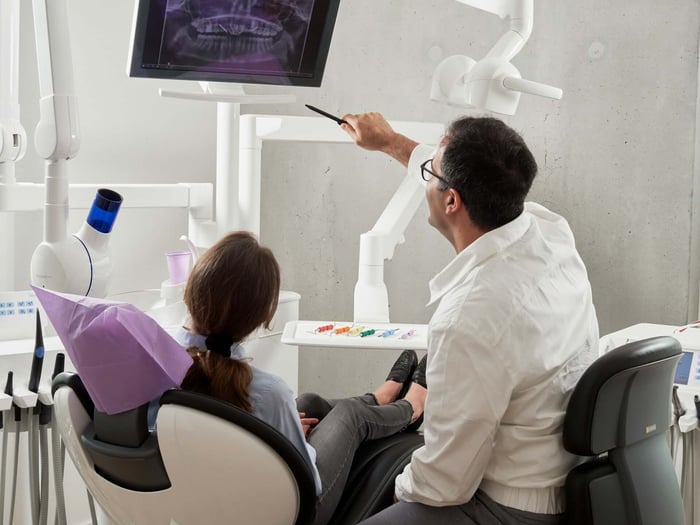
That first dental visit is usually quicker and more relaxed than most parents expect. For babies and toddlers, it often takes 30 to 45 minutes, and most of that is just talking with you.
How a Pediatric Dentist or Family Dentist Checks a Baby or Toddler
For infants, the dentist might do a "knee-to-knee" exam: you and the dentist sit facing each other, and your baby's head rests on the dentist's lap. It keeps the baby calm and gives the dentist a good view. Toddlers who can sit in the chair usually get a quick, gentle exam.
The dentist checks each tooth, looks at gums, and pays attention to jaw and bite development. It's not complicated. It's more like a careful look and a conversation.
What the Exam Usually Includes
A standard first dental visit for a young child covers:
Visual check of all erupted teeth and gums
Gentle cleaning or polishing if the child's up for it
Fluoride application to help protect enamel
Tips on brushing and how much toothpaste to use
Discussion of diet, bottle, and pacifier habits
Assessment of jaw growth and bite
Medi-Cal covers these preventive visits, fluoride treatments, and cleanings for eligible kids, which means cost doesn't have to be the reason a family puts off that first appointment.
Questions Parents Should Bring to the Visit
You know your child better than anyone, so your questions matter. Consider asking:
Are their teeth coming in on schedule?
How much fluoride toothpaste should we use?
Should I worry about thumb-sucking or pacifiers?
When is it time to start flossing?
The answers shape how you care for your child's teeth at home. Prepping your child beforehand can also make things smoother.
How to Make the Appointment Easier on Your Child
A calm first visit makes a big difference for future appointments. The way you talk about it at home matters just as much as what happens in the office.
How to Talk About the Visit in a Calm Way
Keep things positive and simple. Say you're going to get their teeth counted and cleaned, and avoid words like "shot," "drill," or "hurt," even if you're trying to reassure them that those things won't happen. Kids pick up on the words, not always the reassurance.
Reading a children's book about the dentist a few days before can make it less mysterious. Or try role-playing at home: pretend to count each other's teeth. It helps toddlers know what's coming without building anxiety.
Best Time of Day to Schedule for Babies and Toddlers
Morning appointments usually work best for little ones. Kids are more rested and cooperative earlier in the day, before they get hungry or tired. Try not to schedule during nap time.
After-school and Saturday appointments are available for busy families. Scheduling a family dentist visit in Gardena at a time that works for you takes away one more excuse to delay.
What Parents Can Do if Their Child Is Nervous
It's totally normal for toddlers to fuss or cry at a first visit. The dental team expects it and won't judge. Bring a comfort item, like a favorite stuffed animal, and stay close so your child can see you.
If your child is too anxious for a full exam, a good dental team won't force it. Sometimes just sitting in the chair and meeting the dentist is enough for the first try, with a real exam next time. That patience helps kids feel safe coming back.
Caring for Teeth Between Babyhood and School Age
That first visit gives you a personalized plan, but daily care at home is what really keeps your child's teeth healthy.
Brushing, Fluoride, and Bottle Habits at Home
Start brushing as soon as the first tooth shows up. Use a soft, infant-sized toothbrush and a dab of fluoride toothpaste, about the size of a grain of rice, for kids under three. For ages three to six, use a pea-sized amount. Young kids shouldn't swallow toothpaste, so stick around when they brush.
Don't put your baby to bed with a bottle of milk, formula, or juice. If a bottle is needed for sleep, fill it with water. This one change lowers the risk of baby bottle tooth decay, a common problem for toddlers and preschoolers in Gardena.
Limit juice to four ounces daily for kids ages one to three, and serve it in a cup, not a bottle. The American Academy of Pediatrics suggests skipping juice entirely in the first year.
How Often Kids Should Come Back After the First Checkup
Most kids should come back every six months for a cleaning and exam. If your child is higher risk for cavities, maybe due to diet, bottle use, or family history, the dentist might suggest visits every three or four months.
Medi-Cal covers two preventive cleanings and exams per year for eligible kids, so there's no cost barrier if you're enrolled. These regular cleanings and fluoride treatments are some of the best ways to protect young teeth.
When to Search for a Dentist Near Me for Faster Help
Sometimes you can't wait for the next checkup. If you're searching for a dentist near me for your child, you're probably dealing with one of these:
A tooth that's been knocked out or cracked
Swelling in the face or gums
A toothache that's keeping your child up or making it hard to eat
A new cavity that seems to be getting worse quickly
These are reasons to call the same day. Many Gardena offices keep same-day or next-day spots open for urgent dental needs.
Finding Gentle, Family-Friendly Care in Gardena
If you're looking for children's dental care in Gardena, you probably want a place that doesn't scare your child, a staff that explains things clearly, and a schedule that fits your life. That's not too much to ask.
What Busy Parents Often Look for in a Children's Dental Office
The practical checklist for most Gardena parents searching for a children's dentist near them usually includes:
Accepts your insurance, Medi-Cal/Denti-Cal, or offers other payment options
Saturday or after-school appointments
Gentle, patient staff who know how to work with young kids
Clear communication about what the visit involves
Spanish-speaking staff available
A waiting area that feels welcoming, not intimidating
These aren't extras. They're the basics that make it possible for busy parents to actually get their kids seen.
Cost, Scheduling, and Other Practical Questions to Ask
Before you book, double-check a few details with the office. Ask if they take your Medi-Cal plan, what you'll need to bring for your child's first visit, and whether you can schedule online or have to call. No insurance? See if they offer membership plans that cover basic visits for a set monthly or yearly fee.
If you've got more than one kid, it's worth asking if siblings can get appointments on the same day. Honestly, that's a lifesaver: one trip, less chaos, and it's way easier to keep everyone on track with their dental care.
When to Book a Visit for Peace of Mind
If your child already has a tooth and hasn't seen a dentist yet, go ahead and book now. There's no shaming or judgment, just real people who want to help you catch up.
For babies under one without teeth, circle their first birthday as your target. Treat it like a well-child checkup, because really, that's what it is.
Frequently Asked Questions
Here's what parents actually want to know about the timing and details of that first dental visit.
Is It Okay to Wait Until My Child Is 2 or 3 for Their First Dental Checkup?
Honestly, waiting until two or three means you might miss the best window to catch and reverse early tooth decay. Pediatric dental groups recommend a visit by age one or within six months of that first tooth. Getting in early helps protect more teeth and sets up good habits.
Should I Bring My Baby in as Soon as the First Tooth Comes in, Even if It Looks Fine?
Yes, definitely. Even a healthy-looking tooth can have early decay you can't see. That first visit gives you a baseline and a personalized brushing plan. Plus, it's a low-pressure way for your child to meet the dentist before anything stressful ever happens.
What Happens at a First Dental Visit for a Toddler, and How Long Does It Usually Take?
Plan on 30 to 45 minutes. The dentist will do a gentle exam, clean if your child's up for it, maybe apply fluoride, and talk with you about care at home. No scary stuff. Unless there's an urgent problem, it's all pretty straightforward.
How Often Should My Child Get Dental Cleanings Once They've Had Their First Visit?
Most kids need a cleaning and checkup every six months. If your child's at higher risk for cavities, the dentist might suggest every three or four months. You'll get a clear plan after that first appointment.
How Do I Find a Kid-Friendly Dentist Near Me That Works With My Budget or Insurance?
Start by calling local offices directly and asking whether they accept your specific plan, since coverage and provider networks shift over time. It's worth asking about Saturday or after-school appointments, sibling scheduling, and membership plans if you don't have insurance. A little homework up front saves you a surprise at checkout.
If My Child Is 4 or 5 and Hasn't Been Yet, What Should We Do to Catch Up Safely?
Just call and get an appointment soon. The dentist will check everything, take X-rays if needed, and deal with any issues they find. Four or five isn't the ideal starting point, but it's still a good time to begin. No guilt trips, just help to get your child's teeth healthy moving forward.
Your Child's Smile Can Start Strong Right Here
Taking your child to the dentist early is one of the best, most practical things you can do for their health. The timing's simple, the first visit is easy, and with the right office, cost shouldn't stand in your way.
You don't have to bounce between offices or get lost in insurance paperwork. There's a team here in Gardena who knows what local families actually need and can walk you through everything in a single visit.
Want to get your child's smile off to a great start? Schedule an appointment with Dentist of Gardena online or call (424) 321-7470. Saturday appointments are available, an in-house membership plan helps families without insurance, and new patients of all ages are welcome, including babies coming in for their very first checkup.