If you've ever sat in the waiting room while the team preps an X-ray for your child, you're not alone in feeling a twinge of worry. "Radiation" is one of those words that makes parents pause, and that reaction is completely reasonable.
A lot of parents say yes at the appointment because they don't want to seem difficult. Then they go home and search online. That's not the way it should work. You deserve a real answer before anyone positions a sensor near your child's mouth. Not a reassurance. An explanation.
This guide covers what research actually shows about dental X-rays for kids, why they matter, which types are used at different ages, and what happens at a typical appointment.
The Short Answer on Safety and Radiation Exposure
Dental X-rays for children are safe when used appropriately. Both the American Dental Association (ADA) and the American Academy of Pediatric Dentistry (AAPD) support their use when a child's age, cavity risk, and dental history call for it.
Why Modern Digital Imaging Uses Much Less Radiation
Digital X-rays use an electronic sensor instead of older film technology. That switch cut radiation exposure by up to 80 percent. For kids who may need images taken across multiple visits over the years, that difference adds up.
The images appear almost instantly, so retakes are rare. Fewer retakes mean less total exposure. Sensors are also sized for smaller mouths, so the beam only goes where it needs to.
How Dental X-Rays Compare With Everyday Exposure
Radiation gets measured in microsieverts (µSv). A single bitewing X-ray with digital equipment delivers about 1 to 5 µSv.
The CDC notes that a short domestic flight clocks in around 10 µSv. Normal daily background radiation, just from living your life, adds up to much more over the course of a year.
Exposure Source | Approximate Radiation (µSv) |
|---|---|
Digital bitewing X-ray | 1 to 5 |
One-hour flight | ~10 |
Chest X-ray (medical) | ~20 |
Daily background radiation | ~8 to 10 |
Panoramic dental X-ray | ~14 to 24 |
Dental X-rays sit on the very low end of what kids encounter in daily life.
Why Dentists Weigh Benefits Against Minimal Risk
Dental teams don't take X-rays by default at every visit. The AAPD bases recommendations on each child's cavity risk, age, and history. Low-risk kids with no symptoms may go much longer between images.
When imaging is needed, the payoff is real. Catching a cavity early means a smaller fix and a shorter, less stressful appointment.
How Dental X-Rays Help Children Beyond a Visual Exam
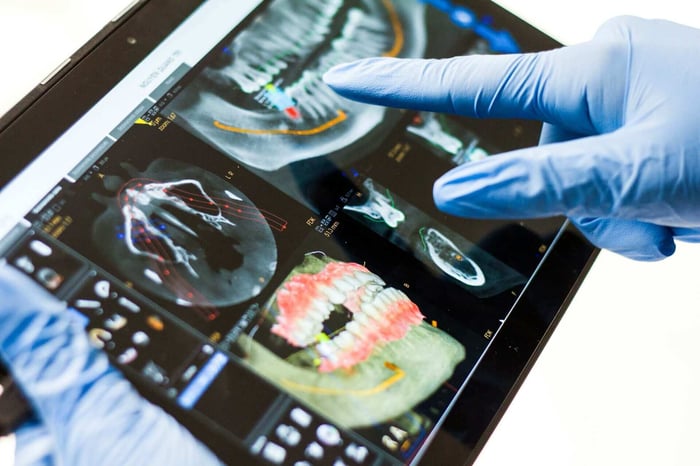
What you see in a mirror is only part of the picture. X-rays show what's happening between teeth, under the gumline, and inside the jaw. Those are places a dentist simply cannot see.
Finding Cavities Between Teeth
Cavities that start between teeth stay hidden during a regular checkup. Bitewing X-rays are the only reliable way to find them early. Catching decay at that stage usually means a small filling instead of something more involved.
Kids who snack often, have crowded teeth, or a history of cavities face a higher risk for this type of decay. A dental checkup paired with the right images gives a much more complete picture of what's going on.
Monitoring Tooth Development and Jaw Growth
Kids' mouths are always changing. Baby teeth move out, permanent teeth come in, and jaws keep growing. X-rays let a dentist confirm that development is on track and flag anything unusual early.
If you're already thinking about orthodontic treatment, growth monitoring becomes even more important. Spotting crowding or jaw alignment issues early tends to make them easier to address. This matters especially for anyone considering clear aligner treatment, since planning depends on accurate images.
Checking for Impacted, Missing, or Extra Teeth
Some kids are born missing permanent teeth (hypodontia). Others have extras (supernumerary teeth). An impacted tooth doesn't break through because bone or another tooth blocks it. None of this is visible from the outside.
Panoramic X-rays, which capture the whole mouth in a single image, are especially good at finding these problems before they become painful or disrupt spacing. Identifying an impacted tooth at age ten or eleven is much simpler to address than after surrounding teeth have shifted.
Which Images Children May Need and When
Different X-rays do different jobs. Not every child needs all of them at every visit.
Bitewing X-Rays for Hidden Decay
Bitewing X-rays are the standard at children's dental visits. Your child bites gently on a small sensor, and the image shows back teeth side by side. This is how hidden decay and the condition of any existing fillings get checked.
For average-risk kids, these are typically done every 12 to 24 months. Higher-risk children may need them more often. Those with very healthy, well-spaced teeth may go longer between sets.
Periapical X-Rays for a Single Tooth
A periapical X-ray zooms in on one tooth from crown to root tip. Dentists use it when a specific tooth needs a closer look, because it hurts, looks infected, or was injured. These are taken as needed, not routinely.
Panoramic and Occlusal X-Rays for Growth and Position
Panoramic X-rays swing around the outside of the head and capture the full mouth in one shot. Occlusal X-rays show the position of teeth from above or below. Both are useful for tracking teeth that haven't come in yet and for orthodontic planning.
X-Ray Type | What It Shows | Typical Use |
|---|---|---|
Bitewing | Hidden decay, filling condition | Routine checkup |
Periapical | Single tooth root and bone | Pain, injury, infection |
Panoramic | Full mouth, jaw, all teeth | Growth checks, ortho planning |
Occlusal | Tooth position, unerupted teeth | Development monitoring |
How Often Children Need Imaging at Different Ages
There's no single schedule for every child. The AAPD bases its guidance on age, whether teeth are touching, and assessed cavity risk.
Toddlers and Preschoolers
Very young kids may not need X-rays at all if their teeth aren't touching and there are no signs of decay or injury. Once back baby molars start making contact, hidden decay becomes possible. That's usually when a dentist first considers bitewing images.
School-Age Children
Kids ages six to twelve have a mix of baby and permanent teeth coming in. This is when imaging tends to happen more often, since so much is changing. Bitewings track decay and panoramic images monitor incoming permanent teeth.
Keeping up with imaging during these years helps catch problems before they affect adult teeth. Saturday and after-school appointments at a family dental office make it easier to fit these visits into a busy school schedule.
Teens and Orthodontic Checks
Teens with braces or aligners often need more frequent images to track progress. Those who snack heavily or struggle with brushing may get bitewings more often. Panoramic X-rays are common in early teens to check on wisdom teeth and confirm all adult teeth are present.
What Offices Do to Keep Exposure Low and Kids Comfortable
Every step of a pediatric imaging appointment is designed to minimize exposure and keep children calm.
Child-Sized Sensors and Fast Digital Systems
Sensors for pediatric imaging come in sizes that fit smaller mouths. A comfortable fit means better positioning and fewer retakes. Modern digital systems capture images in under a second, so kids don't have to hold still for long.
Both factors reduce total exposure and make the experience less stressful.
Lead Aprons and Thyroid Collars
During dental X-rays, children wear a lead apron over the chest and lap to block stray radiation from the torso. A thyroid collar, a small lead band around the neck, gives extra protection to the thyroid gland. The AAPD lists these as standard practice in pediatric dentistry.
What the Appointment Actually Looks Like
A dental assistant places the sensor in your child's mouth, asks for a gentle bite, and takes the image in under a second. The apron and collar go on first, come off right after. The whole imaging portion rarely takes more than a few minutes.
If your child is nervous, ask the team to walk through each step before starting. Kids who know what's coming tend to relax, which makes everything go faster.
Making a Calm, Informed Choice for Your Child
The team at Gardena Dental Care explains what type of X-ray is being recommended for each visit, what it looks for, and why it matters at that point in your child's development. Parents who want more detail get it. Those who want to understand the images afterward get that too. Asking questions before you agree is smart, and a team worth trusting will welcome it.
Questions Worth Asking Before Any Imaging
Don't hesitate to ask before the appointment starts:
Why is this X-ray recommended for my child today?
When was the last set of images taken?
What are you looking for, and what happens if you find something?
Will you use a thyroid collar and lead apron?
Are these digital X-rays?
Clear answers mean the team has thought it through. If answers are vague, that's worth noting.
Frequently Asked Questions
At What Age Do Kids Usually Start Needing Dental X-Rays?
Most kids first need bitewing X-rays when their back baby teeth start touching each other, usually somewhere between ages two and four. Before that, a regular visual exam might be enough if there aren't any symptoms.
How Often Should My Child Get Dental X-Rays?
The AAPD says it depends on your child's cavity risk and development, not a set schedule. Low-risk kids might only need bitewings every 18 to 24 months, while higher-risk kids could need them every 12 months or a bit more often.
How Many Dental X-Rays Can a Child Have in One Visit?
There's no set number for every child. A routine visit often includes two to four bitewing images. A more comprehensive visit or orthodontic planning may add a panoramic image. The team only recommends what's needed for that specific visit.
Can I Refuse Dental X-Rays for My Child, and What Happens if I Do?
Yes, you can say no. The dentist will note your choice and document that the exam was limited. Refusing imaging means some issues, like decay between teeth or hidden developmental problems, might not show up until they're more advanced and harder to treat.
Are Dental X-Rays Needed for a 3-Year-Old or a Child Under 6?
Not always. A healthy three-year-old with spaced baby teeth and no signs of decay might not need X-rays yet. But if the teeth touch, there's visible decay, or your child has had pain or an injury, imaging could be appropriate even for very young children. The dentist decides on a case-by-case basis.
What Can Dental X-Rays Show That a Regular Exam Can Miss in Kids?
X-rays catch decay forming between teeth, root or jawbone problems, teeth growing in odd directions, and missing or impacted teeth. A visual exam alone usually can't spot these until things are much further along.
Your Next Step Toward Confident Pediatric Dental Care
Understanding what dental X-rays do and how little radiation modern imaging involves makes it easier to feel good about the process. The protective steps are simple, the exposure is low, and catching hidden problems early makes treatment faster and easier when it's needed.
Gardena Dental Care offers Saturday visits and flexible payment options through their insurance and financing plans, so you can find a time that fits your week. Call (424) 295-7885 or request an appointment online to talk through what your child might need next.