Your teenager's smile suddenly matters to them, and to you too. Between busy schedules and the reality of orthodontic costs, it's not a simple decision for families in Gardena. Cost, school sports, daily routines, and how long the process takes are all real factors that deserve a real answer.
This guide breaks down both options in plain terms: how each works day to day, what they cost, how they fit into a teen's life, and what a dentist actually looks for before making a recommendation. Scan through, come back to sections, whatever works for you.
By the end, you'll have a clear enough picture to walk into a consultation knowing what questions to ask.
The Quick Answer: Which Option Fits Which Teen?
Not every teen can pick freely. Some cases need one approach over the other, and the right fit depends on how much the teeth have moved and what needs correcting.
When Clear Aligners Make Sense
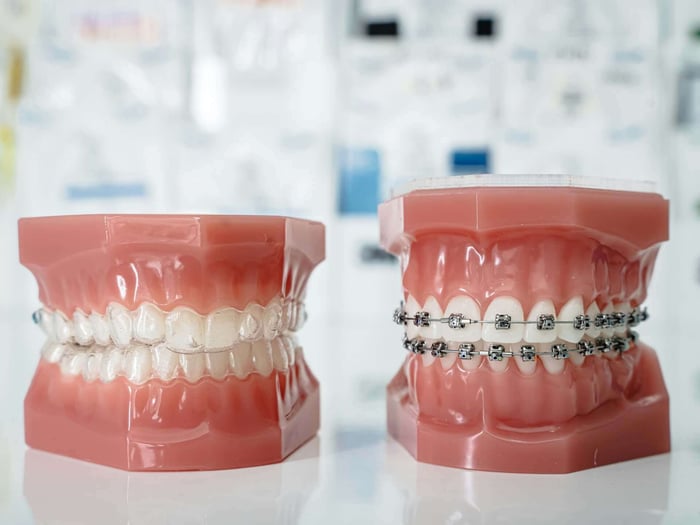
Clear aligners like Invisalign Teen work well for mild to moderate alignment issues: crowded teeth, small gaps, minor bite problems. Teens active in sports or band often prefer them. Removable trays mean no metal scraping during practice, and the nearly invisible look is a relief for anyone self-conscious about their smile.
The catch is compliance. Aligners only work if your teen wears them 20 to 22 hours a day. If your teen tends to forget things, this requires some honest thought.
When Braces Are the Better Fit
Metal braces handle tougher cases: major bite corrections, severe crowding, jaw issues. If your teen isn't likely to keep up with removable trays, braces keep things on track without relying on memory. Ceramic braces offer a less noticeable option if the look of metal is a concern, but both use the same system to guide teeth into place.
Why a Personalized Exam Matters First
Charts and articles can only take you so far. The best answer comes from an in-person evaluation.
Factor | Clear Aligners (Invisalign Teen) | Traditional Braces |
|---|---|---|
Visibility | Nearly invisible | Noticeable |
Best for | Mild to moderate cases | Mild to complex cases |
Removable | Yes | No |
Requires discipline | High | Lower |
Sports/Band friendly | Yes | Less so |
Emergency visits | Rare | Possible if bracket breaks |
How Each Treatment Works Day to Day
Knowing the daily routine helps you and your teen figure out what you're actually signing up for.
How Braces Move Teeth
Braces use brackets bonded to each tooth and a thin wire that connects them. The wire applies steady pressure, nudging teeth into place over time. Your teen will visit the orthodontist every six to eight weeks for adjustments, and some soreness after each visit is normal and usually fades quickly. Occasionally, a bracket pops off if something hard gets bitten, which means an extra trip to get it fixed.
How Invisalign Teen Treatment Works
Invisalign Teen starts with a 3D digital scan, no messy impressions. That scan produces a set of custom aligners, with each tray worn for about one to two weeks before switching to the next. Some trays have eruption tabs to leave space for teeth that haven't come in yet, which is helpful for teens still growing.
Aligners come out for eating, brushing, and flossing, keeping oral hygiene simpler than with fixed braces. If a tray gets lost or damaged, replacements are included.
What Appointments Look Like
Both options involve checkups roughly every six to eight weeks. After-school and Saturday visits are available at Gardena Dental Care, which helps when you're juggling school and activities.
Real-Life Factors Teens and Parents Care About Most
Daily habits, activities, and confidence shape which option actually works.
Appearance and School Social Life
Clear aligners pretty much disappear, which helps self-conscious kids. Metal braces stand out, though some teens actually like picking bracket colors. Ceramic braces blend in better but still use the same fixed system. Neither choice is wrong; it depends on the teen.
Sports, Band, and Busy Schedules
For contact sports, removable aligners mean no worries about lips getting cut by brackets. You can wear a mouthguard over aligners for extra protection. For band kids who play wind or brass instruments, aligners can be taken out for practice or performances.
Oral Hygiene and Food
Braces make brushing and flossing more work, because brackets and wires trap food and plaque. Popcorn, hard candy, and sticky snacks are off the table. Invisalign Teen avoids those food restrictions. Just pop out the trays at meals. But your teen must remember to put them back in each time.
Compliance: Will Your Teen Actually Follow Through?
This is the part most comparison guides skip. Whether Invisalign Teen works for your teenager comes down almost entirely to one question: will they put the trays back in after every meal, every time, for the full treatment period? If you're reading that and immediately picturing your teen's bedroom floor, that's useful information.
Invisalign Teen trays have a blue compliance indicator that fades with wear, so you can check if they're being used enough. If trays aren't worn as directed, treatment drags out and may cost more. Braces work whether or not your teen remembers anything, which some families find is the right call.
Time, Cost, and Long-Term Value
Treatment length and cost are usually top of mind. Both can vary more than you'd expect.
How Long Treatment Takes
Braces usually take 18 to 24 months for teens, depending on complexity. Invisalign Teen often runs 12 to 24 months, but tougher cases sometimes take longer. Missing checkups or skipping tray wear can stretch out either timeline.
What It Costs
Option | Estimated Cost Range | Insurance Coverage | Good For |
|---|---|---|---|
Metal Braces | $3,000 to $7,000 | Often partially covered | Complex cases, budget cases |
Ceramic Braces | $4,000 to $8,000 | Sometimes covered | Moderate to complex, less visible |
Invisalign Teen | $3,000 to $8,000 | Often partially covered | Mild to moderate, motivated teens |
These are estimates. You'll get a specific quote after an exam. The insurance and financing options at Gardena Dental Care include payment plans to help families manage costs, and you'll see a detailed breakdown of what's covered before committing to anything.
What an Orthodontist Looks for Before Recommending Either Option
An orthodontic specialist considers the full picture, not just how things look in a selfie.
Bite Problems, Crowding, and Jaw Development
Bite issues, like overbite, underbite, or crossbite, affect which treatment works best. Severe crowding or teeth that haven't erupted yet often mean braces are needed. Jaw development matters too. Sometimes braces must work alongside other appliances to fix issues that aligners simply can't handle on their own.
How Experience and Training Affect Treatment Planning
Advanced training shapes how accurately a treatment plan gets built. The American Association of Orthodontists notes that orthodontists complete two to three extra years of specialized education after dental school.
Dr. Barkhordar trained at the University of Southern California School of Dentistry and completed orthodontic training at Harvard School of Dental Medicine. His Invisalign Diamond+ top 1% provider status reflects a high volume of Invisalign cases, especially for teens. That depth of experience matters most when your teen's situation isn't a textbook case.
Questions to Ask at a Consultation
Bringing your own questions makes the visit count. Consider asking:
Is my teen's bite too complex for clear aligners?
What's the estimated treatment time for each option in my teen's case?
How will we track progress, and what if we fall behind schedule?
What does the cost cover, and what could add to it?
Are payment plans available, and do you take our insurance?
What's the plan for retainers after treatment?
Those answers reveal a lot about the treatment and the practice.
Your Next Step for Your Teen's Smile in Gardena
Both options can work well when matched to the right patient and managed by someone with experience. The real difference comes down to bite complexity, daily habits, budget, and how motivated your teen is.
Gardena Dental Care offers Saturday and after-school appointments, clear cost breakdowns, and flexible payments so the process can fit your life. Call (424) 295-7885 to set up your teen's orthodontic consultation or request an appointment online in just a couple of minutes.
Frequently Asked Questions
How Do I Know if My Teen Is a Good Fit for Clear Aligners Versus Traditional Braces?
The best way to know is with a clinical evaluation by an orthodontic specialist. Clear aligners generally work for mild to moderate alignment issues, while braces can tackle more complex bite corrections.
What Are the Biggest Pros and Cons Parents Should Weigh Between Clear Aligners and Braces for Teens?
Clear aligners are flexible, easier to clean, and almost invisible, but your teen needs to wear them consistently. Braces do their job 24/7, but they come with food restrictions and more involved cleaning.
Which Option Usually Works Faster for Common Teen Orthodontic Needs Like Crowding or Gaps?
For mild to moderate crowding or small gaps, Invisalign Teen sometimes finishes treatment faster, often 12 to 18 months. Braces usually take 18 to 24 months, though complicated cases can stretch longer for either option.
How Much Do Clear Aligners and Braces Typically Cost for Teenagers, and What Payment Plans Are Common?
Both options usually fall between $3,000 and $8,000, depending on how complex things are and your provider. Many offices let you pay monthly, and dental insurance often covers part of the cost for minors.
Will Clear Aligners Work if My Teen Forgets to Wear Them or Loses Trays, or Are Braces a Safer Choice?
If your teen tends to forget or misplace things, braces might be the safer bet since they're fixed in place and always working. Invisalign Teen does offer replacement trays, but your teen still needs to wear them 20 to 22 hours a day to stay on track.
Are Clear Aligners Better for Sports, Band, and Busy School Schedules, or Do Braces Hold Up Better Day to Day?
Clear aligners are usually better for contact sports and wind instruments since you can take them out and there's no metal to worry about. Braces are always in, so there's nothing to remember, which some busy teens actually appreciate.